
Gesture Studies
An unconventional sketchbook to see what the body knows

I used to think of a sketchbook as a small laboratory. These private spaces for artists to experiment, explore, and make new discoveries. Over time, this strange science would alchemize into a body of work. At some point, the play would coalesce into an interesting record of an artist’s curiosities.
When I work in traditional sketchbooks, I feel a subtle pressure for coherence and progress. After all, I’m making a book. These blank pages waiting to be filled with a language known only to the artist.
Over time, I noticed that my sketchbooks felt heavy and dull. I feel too much pressure to enter a record in a sketchbook, simply because it is a book. Despite my best attempts, this practice was not working for me. What brings ease and joy for others caused me discomfort. And I needed a way to feel grounded.
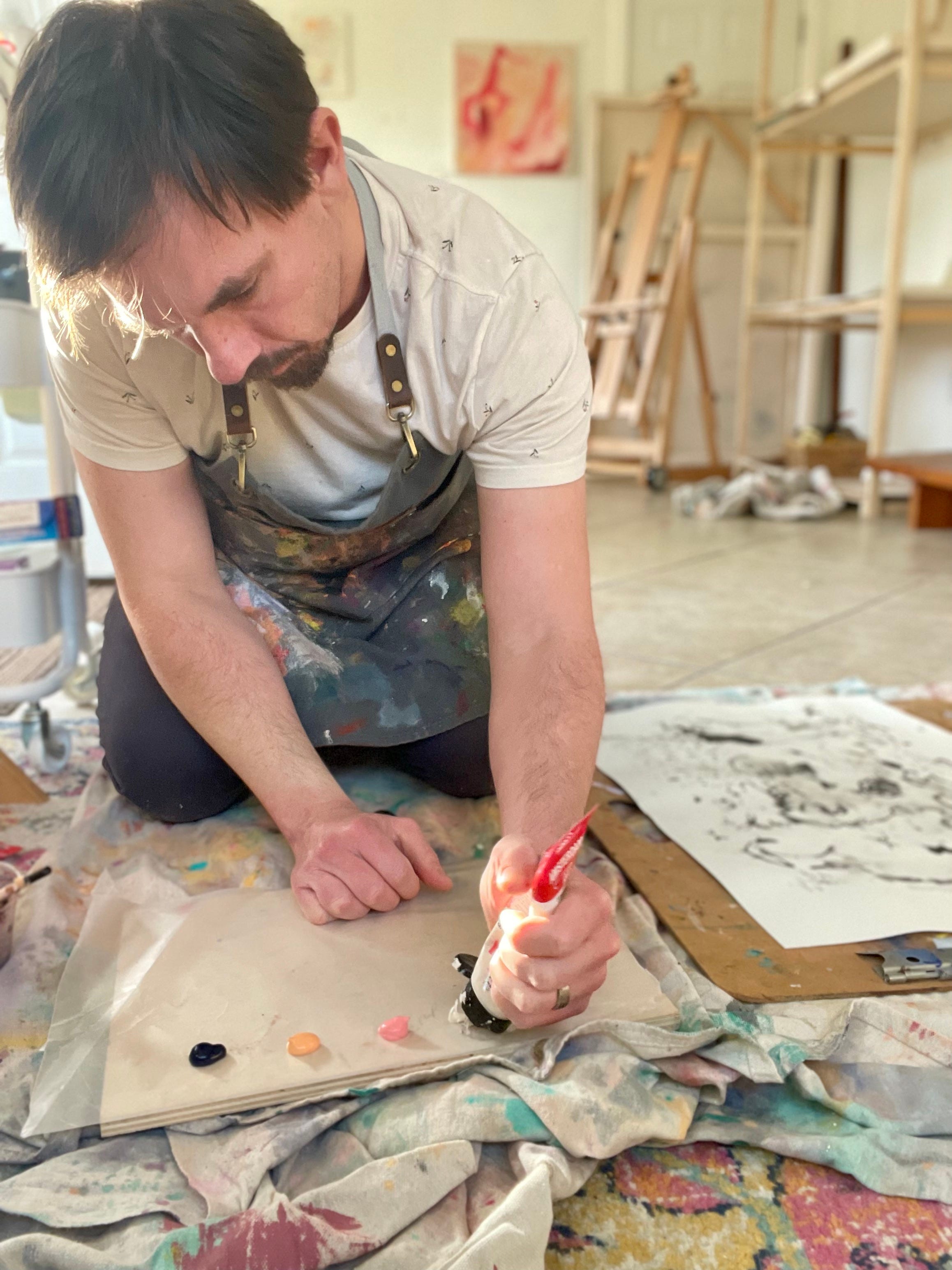
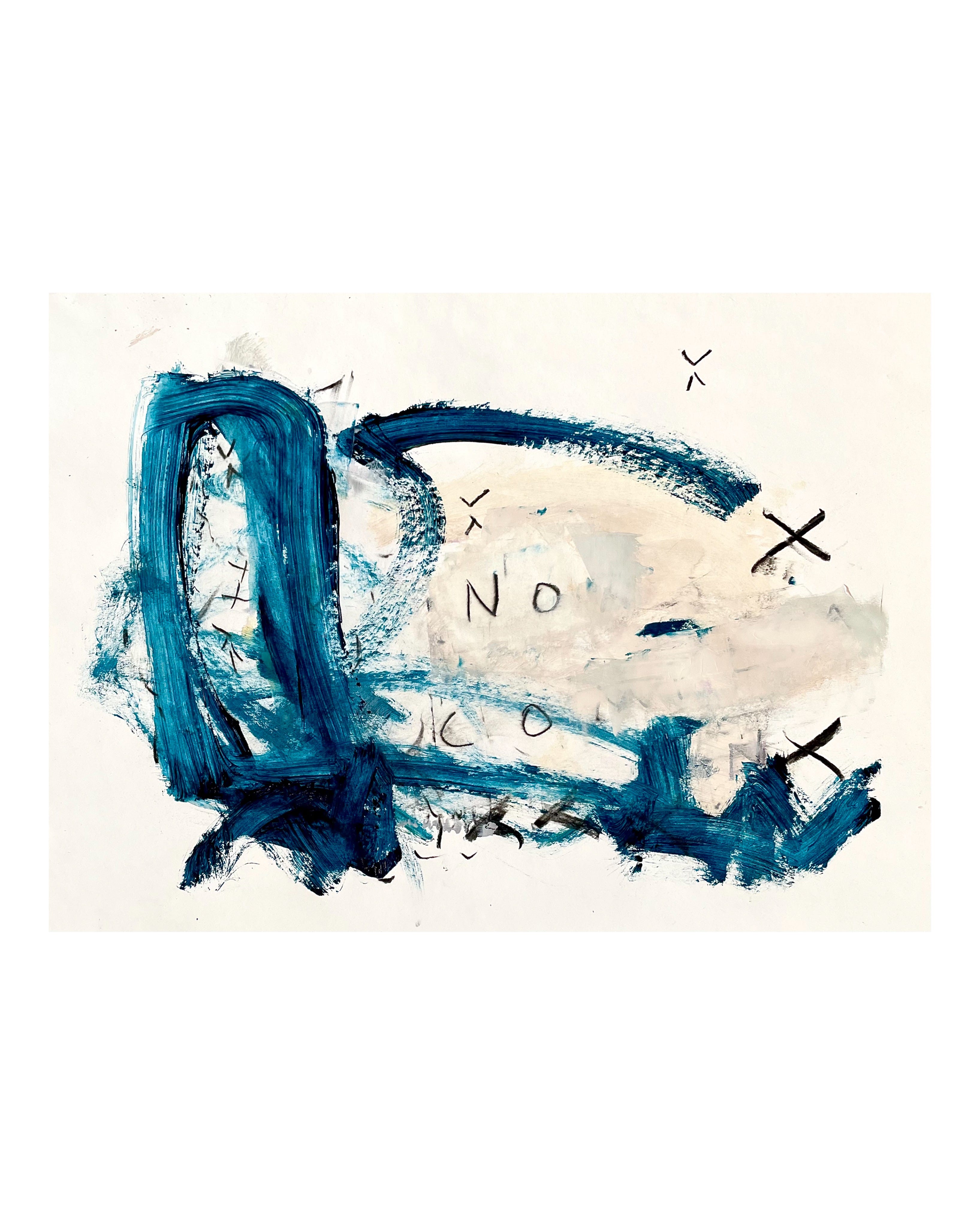
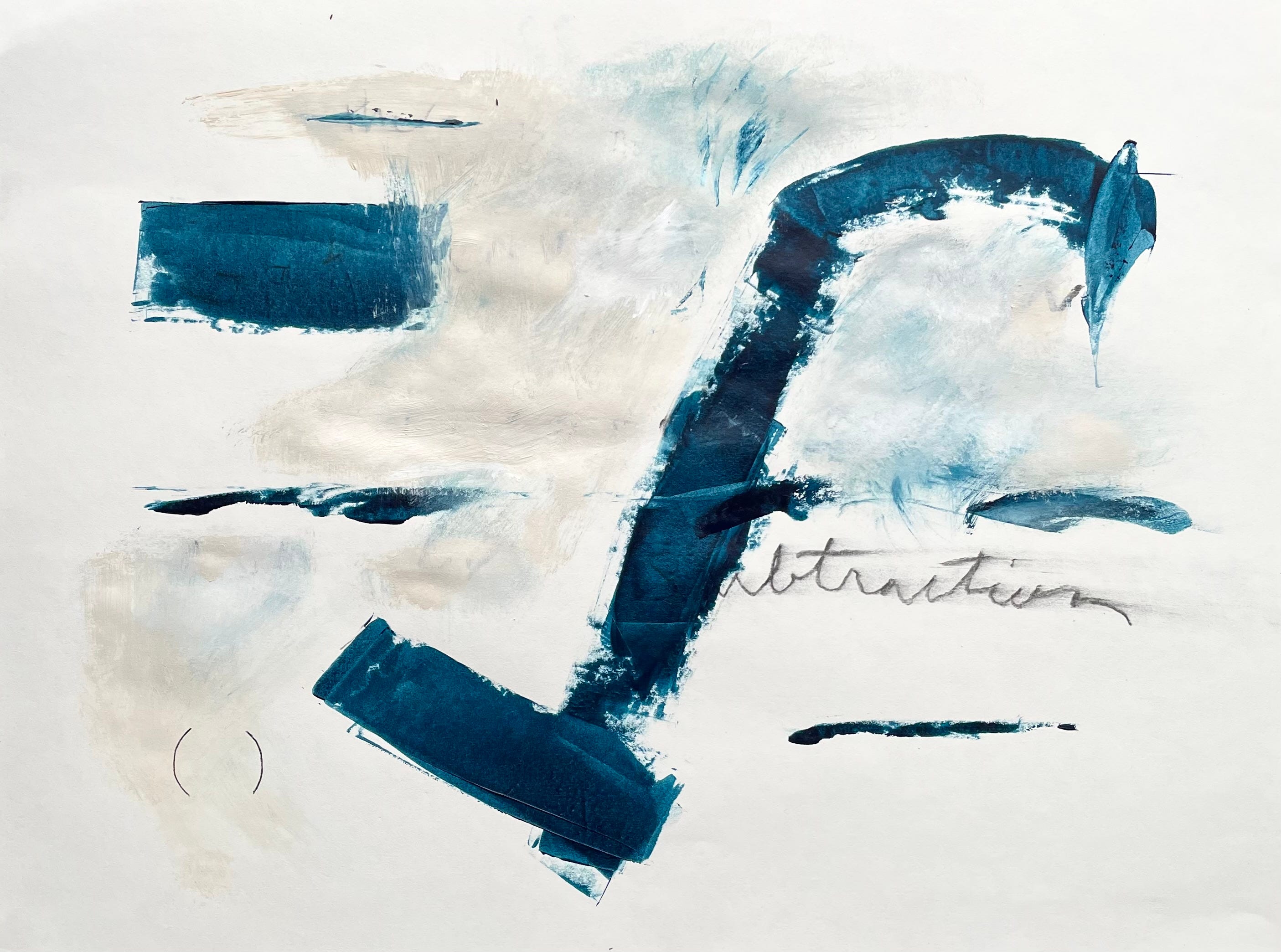
In lieu of the traditional bound book, I began making what I call “gesture studies”, and lots of them. Loose. Fast. Unattached. Working through a stack of cheap paper, these studies are not in service of a larger project. They are my unbound sketchbook to witness my inner work through repetition and iteration.
Gesture as a Way Back Into the Body
In theater, gesture is a shape that tells a story through time. It has a beginning, middle, and end. It is quick communication, with presence and immediacy.
In painting, gesture studies function the same way. They are quick, specific ways to make marks and unearth the story. These studies are not about compositional excellence. They are not about balance, color, or line work. They do not reward cleverness. They ask for one thing only: pay attention and listen to what the body has to say.
Gesture studies are how I become alert and aware of weight, pressure, direction, and time. To borrow another analogy from theater: these papers are improvisations. They are spontaneous responses to the given circumstances, a way to move faster than judgment or analysis.
In this deep winter season, when my nervous system has felt frayed, gesture studies have been the way I return to the body without forcing calm. I didn’t need to pretend my way toward peace. I did not need to regulate myself into contemplative stillness. Instead, I needed to move with honesty to notice what was already there.


Letting Patterns Reveal Themselves
Some days the marks were tense and angular. Other days they were slack, collapsing inward. I try to tell the truth of that day, that moment. As the pages pile higher, I’ve started to look at them together to see what the patterns have to say. Without too much effort, a library of questions and noticing began to emerge:
When I am anxious, what does it look like?
When I feel quietly resourced, what does it look like?
When I am lost or constricted, what does it look like?
Where is there effort and where is there ease?
Without interpretation or naming, these gesture studies became another way for me to notice myself. To become aware of my experience, and see it validated and mirrored back to me.
Unlike a traditional sketchbook, where you might consciously track progress, this practice allowed patterns to surface indirectly. Rather than narrating my inner life, I was witnessing it.
The School of You
We live in a culture where attention is the most valuable commodity. Sophisticated technologies have made a market of our nervous systems, keeping us in rage and stupor for a profit. We gather information while neglecting our clay home, this inner reality that we cannot escape.
Gesture studies resist that impulse. They offer grounding without explanation, acting as a witness to what is otherwise hard to see. They shift perception back towards awareness rather than analysis, helping return to a “soft focus” way of seeing the world.
For me, this has been especially important in seasons when naming things felt premature or insufficient. The gestures held what I could not yet say. They let my inner life move without requiring clarity.


An Invitation
If you are feeling stuck or unmoored, perhaps gesture studies can become your creative practice for a while. They are a way to move without constraint and without thought of experimentation or growth.
They are not to help you improve, but to give grounding.
They are not to prepare, but to witness the present.
They are not to document, but to accompany.
Make many. Make them quickly. Let them contradict each other. Let them build up over time. Let them show you what is already moving beneath the surface.
You may find, as I did, that grounding does not always come from stillness. Sometimes it comes from honest motion until the patterns you have been living inside finally come into view.
"We gather information while neglecting our clay home, this inner reality that we cannot escape." Your bodily practice to explore your inner landscape really spoke to me.